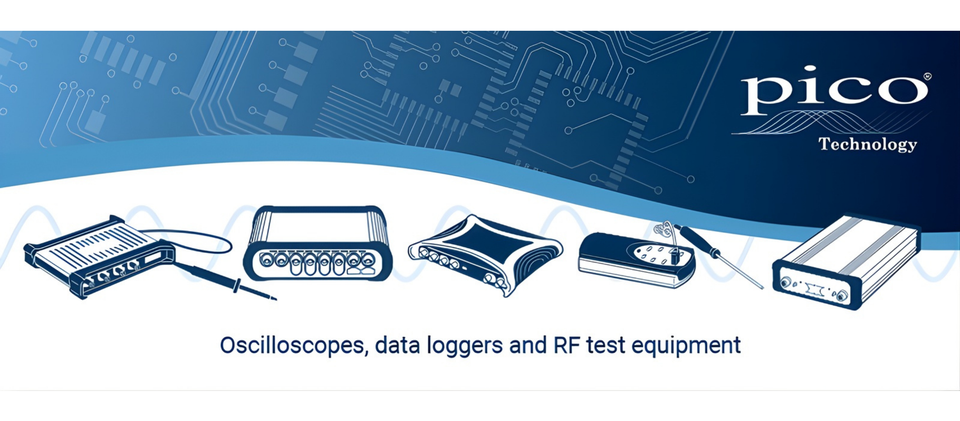
Field technicians rarely get the luxury of a quiet lab bench. Equipment fails in trucks, on factory floors, or inside cramped control cabinets, and a diagnosis has to happen on the spot. USB oscilloscopes portable enough to fit in a laptop bag have changed that reality, letting engineers carry lab-grade measurement tools wherever the fault actually is.
Pico Technology has built a wide catalogue around exactly this need, pairing compact hardware with software that runs the same way on every unit.
Why USB Oscilloscopes Changed Field Service Work
Traditional benchtop scopes were never designed to travel. They needed mains power, a dedicated screen, and a stable surface, none of which exist reliably in a vehicle bay or on a rooftop HVAC unit. USB-powered instruments removed those constraints by drawing power directly from a connected laptop and using its screen for display and analysis.
That shift matters more as equipment grows more complex. Motors, sensors, and control boards increasingly combine analog and digital signals, so diagnostic tools need flexibility as well as portability.
Pico Technology positions its oscilloscope range around that same idea, combining small form factors with the sort of resolution and memory depth that used to require a full-size instrument.
PicoScope 2000 Series: Compact Diagnostics for Mobile Technicians
The PicoScope 2000 Series is built around the idea of saving bench real estate without giving up core functionality. It has been adopted outside pure field service too; Cambridge University selected the PicoScope 2204A for student use because of its portability and because it shares the same user interface as every other scope in the range. That consistency means a technician who learns one unit can move to another model without relearning the controls.
For mobile troubleshooting, that combination of small size and familiar software reduces the friction of carrying test equipment between job sites. The unit connects over USB, draws power from the host computer, and displays results directly on the laptop screen, which is part of why USB oscilloscopes portable in design have become common on service vans.
PicoScope 3000D and 3000E Series: Deep Memory and High Bandwidth in Portable Packages

The PicoScope 3000 Series targets technicians who need more channels and deeper memory while staying within a USB-powered, laptop-friendly footprint. These units offer 2 or 4 analog channels, up to 200 MHz of analog bandwidth, and up to 1 GS/s of real-time sampling. Equivalent Time Sampling can push the effective rate to 10 GS/s for repetitive signals, and buffer memory reaches up to 512 MS, which helps sustain detail even on long timebases. MSO variants add a 16-channel logic analyzer alongside a built-in arbitrary waveform generator.
The PicoScope 3000E Series pushes further into high-performance territory while keeping the same USB-powered portability.
Pico Technology describes it as the first USB-powered scope to reach 500 MHz bandwidth, the first to hit 5 GS/s sampling, and the first with over 1 GS of buffer memory. With up to 2 GS of memory, 10-bit resolution, and four analog channels plus an MSO option, the 3000E Series suits technicians who need depth and speed in equipment that still travels easily between sites.
Mixed-Signal Capabilities Across the Range

Many field problems involve more than a single analog waveform. A failing sensor might need to be checked alongside a digital control signal at the same moment, which is where mixed-signal functionality becomes useful. Several oscilloscope lines fold a logic analyzer directly into the main unit instead of requiring a separate instrument.
The PicoScope 6000E Series extends this mixed-signal approach to higher-performance work, offering up to 3 GHz bandwidth, up to 10 GS/s sampling, and up to 4 GS of memory, with MSO configurations reaching 8 analog plus 16 digital channels at up to 12-bit resolution. That breadth lets a single USB-connected instrument cover both everyday troubleshooting and more demanding signal integrity checks without swapping tools.
- The PicoScope 2000 Series favors a compact, lightweight build suited to quick checks and teaching environments.
- The PicoScope 3000 Series offers up to 200 MHz bandwidth and up to 1 GS/s real-time sampling with up to 512 MS of memory for embedded and service work.
- The PicoScope 3000E Series raises that ceiling to up to 500 MHz bandwidth, up to 5 GS/s sampling, and up to 2 GS of memory for denser waveform capture.
- The PicoScope 6000E Series reaches up to 3 GHz bandwidth and up to 10 GS/s sampling with up to 4 GS of memory for demanding mixed-signal diagnostics.
- The PicoScope 9400A Series moves into a different class entirely, offering up to 33 GHz bandwidth and up to 5 TS/s effective rate for high-speed interface validation.
PicoScope 7 Software: Universal Control Across All Models

Hardware portability only solves half the field service problem; the other half is software that behaves predictably across different instruments. PicoScope 7 is the free software platform that ties the entire range together, running on Windows, macOS, and Linux. A technician using a 2000 Series unit sees the same basic layout and workflow as a colleague running a 6000E Series scope on a different job.
The software includes more than 40 protocol decoders as standard, along with mask testing, so technicians are not left hunting for paid add-ons mid-diagnosis. Data moves directly from the scope to the connected computer, removing the manual transfer step that slows down report writing after a visit. For developers inside service organizations,
Pico Technology also offers an SDK that opens a path to custom C and C# programming against the same instruments.
Real-World Applications: From Automotive to Industrial Troubleshooting
Automotive diagnostics is one of the clearer use cases for USB oscilloscopes portable enough to sit on a workbench or inside a service van. Checking sensor output, ignition timing signals, or communication bus activity benefits from a scope that can be carried between vehicles without a cart. Because models like the 3000 Series already include an arbitrary waveform generator, a technician can both capture and inject test signals from the same box.
Industrial maintenance work often adds digital control lines into the mix, which is where the built-in logic analyzer on MSO models becomes relevant. A single PicoScope 3000 or 6000E unit can watch an analog sensor signal and a digital control line at the same time, rather than requiring two separate instruments. That consolidation is part of why
Pico Technology markets these ranges specifically around service, repair, and embedded systems work, in addition to design and research use.
Beyond vehicles and factory floors, the same portability suits telecoms and electronics labs doing signal integrity validation. The PicoScope 9400A Series, with its 33 GHz bandwidth and support for RZ, NRZ, and PAM4 physical layers, shows how far the portable, USB-connected format now extends. What began as a convenience for mobile technicians has grown into a format capable of covering highly specialized diagnostic work as well.
A toolkit that spans a classroom scope and a 33 GHz sampling instrument under one software interface changes what counts as portable test gear.